Quorum Architecture Reference
Kubernetes
Nodes with Tessera
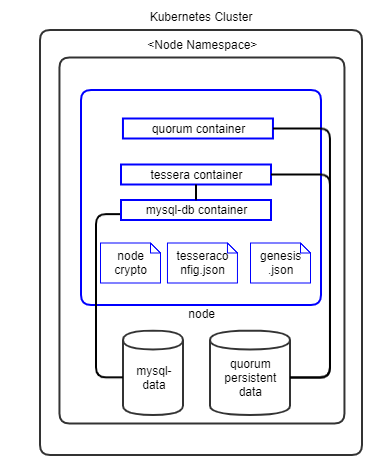
The following diagram shows how Quorum peer nodes with Tessera TM will be deployed on your Kubernetes instance.
Notes:
Pods are shown in blue in the diagram.
Each peer pod will have three init-containers:
certificates-initto read crypto from Vault,mysql-initto initialize MySQL DB andquorum-genesis-init-containerto generate genesis block.Each peer pod will then have three containers:
mysql-db,tesseraandquorumcontainers running. Since they are in the same pod, Kubernetes always schedules them on the same VM and they can communicate to each other through localhost. This guarantees minimal latency between them.The storage uses a Kubernetes Persistent Volume.
Components
Docker Images
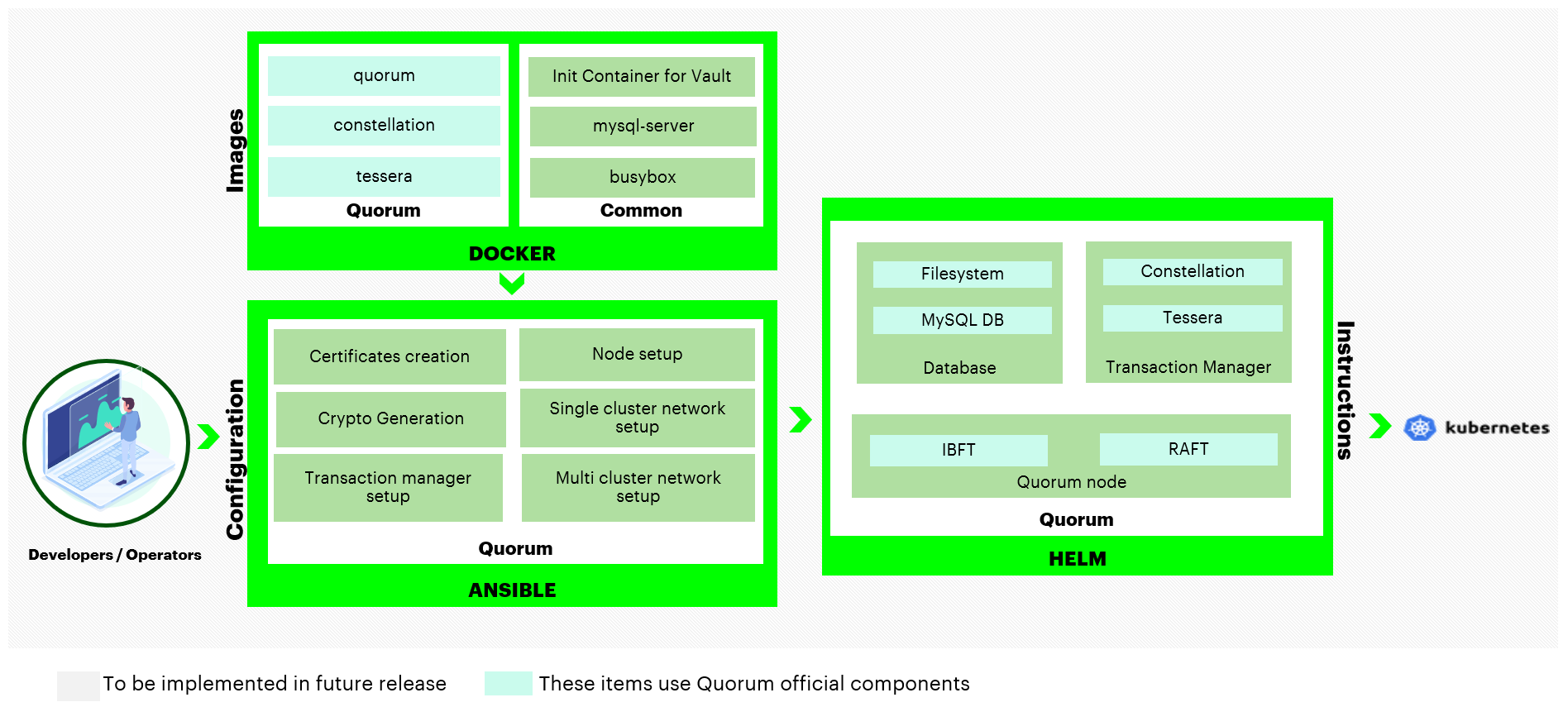
Hyperledger Bevel uses the officially published Quorum Docker images from hub.docker.com. The following Quorum Images are used by Hyperledger Bevel.
Additionnally, following common images are also used:
busybox - Used for DB initialtization
mysql-server - Used as the DB for Tessera Transaction Manager
alpine-utils - Used as a utility to get crypto from Hashicorp Vault server
Ansible Playbooks
Detailed information on ansible playbooks can be referred here and the execution process can be referred here.
Helm Charts
Detailed information on helm charts can be referred here.
Vault Configuration
Hyperledger Bevel stores their crypto immediately in the Hashicorp Vault secrets engine.
The crypto is stored by each organization under path secretsv2/org_namespace - it contains node keys, keystore, passwords, TM keys, and CA certificates for proxy connections.
Optionally, secret_path can be set on the network.yaml to change the secret engine from the default secretsv2/.
The complete key paths in the Vault can be referred here.